 Blog
 Podcast
 Ayuda
 Acceso de clientes


Cómo diseñar un sitio web de socios para que tenga éxito a largo plazo
In this article, you’ll get to know a member of the MemberMouse community who is both a successful web developer y una empresaria que ha creado dos exitosos negocios de afiliación en línea. Sus sitios de afiliación se han convertido en fuentes fiables de relativamente ingresos pasivos que le dan libertad y flexibilidad para trabajar donde y cuando le plazca.
Piensa en este post como un híbrido entre uno de nuestros Desarrolladores destacados y un Caso de éxito de un cliente.
So, if you’ve ever wondered what it takes to truly build a business that gives you the freedom and flexibility you’ve been looking for in your life, this post is for you!
En este post aprenderás:
💡 Cómo Britt descubrió su gran idea para un negocio online
🔧 Estrategias para construir un sitio de membresía exitoso
🖍️ Practical membership site UX & design tips
🔑 Specific MemberMouse tips & tricks
💙 Y mucho más...
Conoce a Brittany Menard

Brittany Menard
Conozca a Brittany Menard (se hace llamar Britt para abreviar).
Es empresaria y desarrolladora/diseñadora web de Chilliwack, Columbia Británica.
¿Nunca has oído hablar de él?
Aquí es donde está en el mapa...
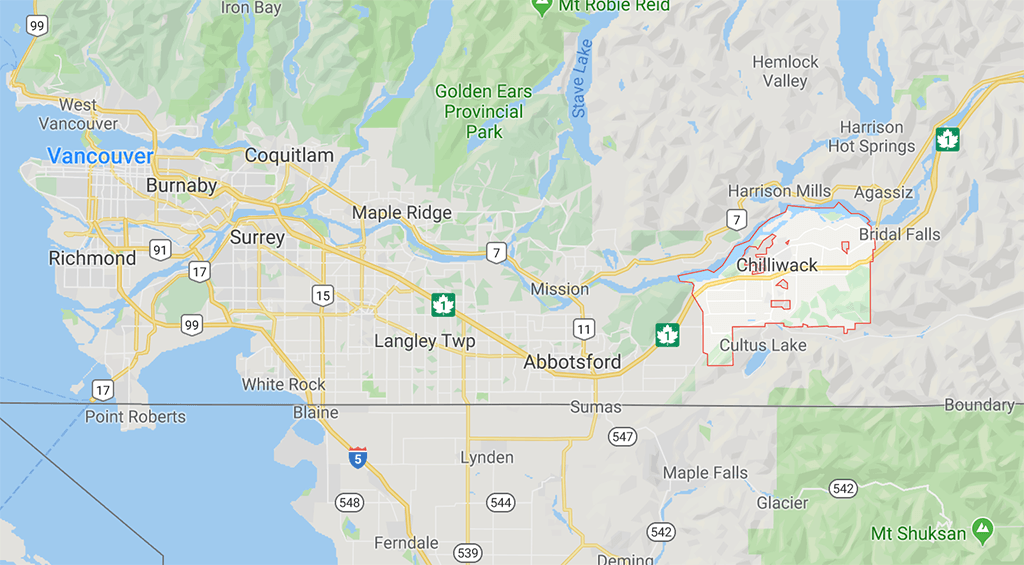
Britt creció en la hermosa campiña del noroeste del Pacífico y es, sin duda, una chica de campo de corazón. Para ella, la mayor recompensa de crear negocios online de éxito es la libertad de vivir y trabajar donde y cuando le plazca.
“I’m very grateful for where I live. we’re so close to so many different forestry roads, the mountains, lakes, and hot springs. It’s really fun to go out and adventure. We’re three hours away from world-class skiing at Whistler and three hours in the other direction to the desert. It’s a unique place to live and I really enjoy it. For me, life is all about balance. I love having the freedom to be able to go out and explore and obviously being able to work on the computer and do what I do, offers that freedom. It’s really fun.”
Los dos sitios de afiliación que Britt posee y gestiona son: La Guía del Ticket Broker & Taquilla Fox.
Ambos sitios ayudan a los corredores de entradas a ganar dinero comprando y vendiendo entradas de deportes, conciertos y eventos en línea. Emprendió su propio camino como empresaria en 2008 y desde entonces ha hecho crecer y evolucionar estos negocios.
Nos sentamos con Britt y tuvimos una conversación fantástica sobre el espíritu empresarial, la gestión de un negocio en línea, y los detalles de la construcción y el crecimiento de los sitios de membresía.
Sus comienzos
¿Cómo empezó a trabajar en diseño y desarrollo web?
"Cuando era pequeño, mi familia tenía un ordenador Tandy con Microsoft Paint. Esa fue mi primera experiencia con el diseño. Veía dibujos y los pintaba en la pantalla con el ratón. Me parecía fascinante.
A partir de ahí, acabamos teniendo acceso telefónico a Internet. Fue muy divertido cuando me permitieron conectarme a Internet durante una hora seguida. Fue una gran cosa. Y así, empecé a crear pequeños sitios web en el viejo arrastrar y soltar constructores como Homestead, GeoCities, y AngelFire. Sí... Y tenía que tener un widget del tiempo y un contador de visitas. Por supuesto. Eran esenciales".

“When I was around 13 years old, I would look at domain names to buy and sell. I was really intrigued by that. I’ve always had a natural entrepreneurial spirit. I don’t really fit into a box, per se. I always looked for business opportunities. So, I would create those websites and eventually transitioned into Microsoft Frontpage. I would design all the websites with the wysiwyg editor and then export it as a table-based website. That’s definitely dating myself, haha!
That’s how I got into all of this. I found it really fun to build these little websites. And then, I discovered WordPress in 2008. Once I found WordPress, I became fascinated by it. It was scalable and still not really that mainstream at the time. But, I saw the potential in it. Ever since then, I’ve built all of my websites on WordPress. I love the ability to add plugins and functionality to it and that it’s open source with a community around it.”
¿Cuándo intentó crear su primer negocio en Internet?
"Escribí La Guía del Ticket Broker cuando estaba en la universidad, allá por 2008. Por aquel entonces tenía un trabajo en la universidad. Trabajábamos en un almacén de ropa y recogíamos pedidos para las tiendas minoristas. La verdad es que era un trabajito bastante divertido.
But one day, six of us all got laid off. They laid us off and a good friend of mine and I said to ourselves, ‘Wait a minute. We basically just got severance without pay. They can’t do that to us. That’s not right!’ So, we went in there and said ‘yeah, you can’t do that. We’d like our severance pay.’
For me, that was a major realization. When you’re working for somebody else, you don’t have control of how much money you can make or the hours you work. You don’t have that same freedom. I had that ‘aha moment’ at the time thinking, ‘I don’t want to work for somebody else. I want to do my own thing.’
At the time, I was still in university. I was taking business and computer courses. I remember sitting in an advertising class and I wasn’t paying attention and I would just sit there and write what eventually became La Guía del Ticket Broker."

“I had become fascinated by that industry because at the time, the Vancouver Canucks NHL team was in the playoffs. I remember looking on eBay and seeing how much their playoff tickets were selling for. And I thought, ‘Holy crap, that’s pretty impressive! There’s gotta be more to this story.’
So I started digging in and learning about ticket brokers and understanding the ticket industry. I signed up for a popular ticket broker message board at the time and couldn’t get enough. I wanted to research all the inner workings of the business and really found it fascinating. I bought and resold tickets myself at that time to help put myself through university.
A partir de ahí, me di cuenta de que no había ningún recurso real disponible para enseñar a otras personas cómo hacerlo. Así que me puse manos a la obra y escribí La Guía del Ticket Broker."
¿Planeó desde el principio crear una empresa de afiliación?
"La primera vez que tuve la idea de iniciar un sitio de membresía en 2010. Escribí La Guía del Ticket Broker eBook en 2008 y siempre quise que fuera más que un libro. Vi que había una oportunidad de tener un sitio de membresía y ayudar a los corredores de entradas a predecir eventos rentables y encontrar entradas que salieran a la venta pronto. Quería crear un recurso para los corredores de entradas de todos los niveles de habilidad. La verdad es que tardé unos años en ponerlo en marcha. Fue sólo una idea durante un tiempo".
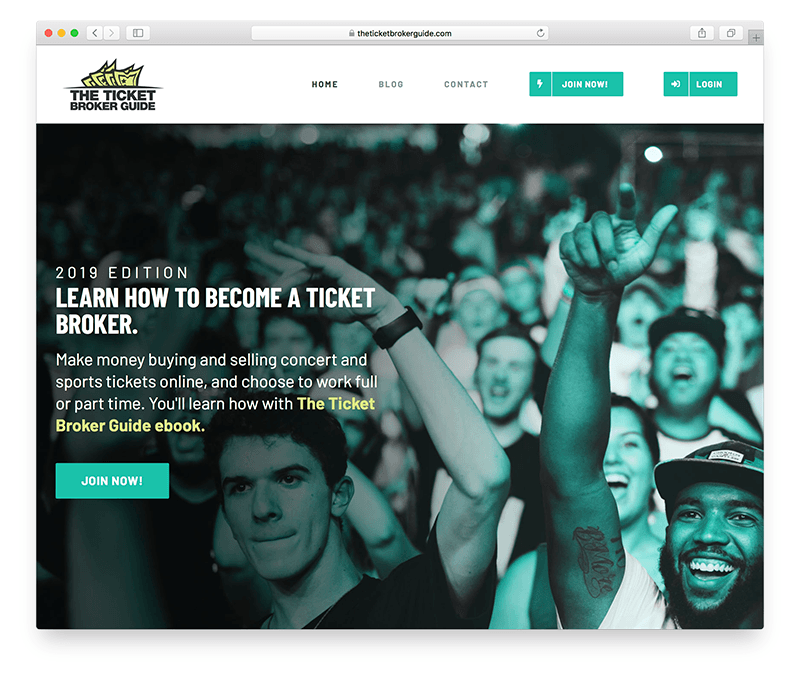
“In 2013 we started Box Office Fox, which is the membership site. We used MemberMouse to build this site and still use MemberMouse today on it. So yeah, that’s been about six years and running. Box Office Fox is a little more advanced. It’s a ticket-on-sale database.”
¿Cuál es la principal diferencia entre The Ticket Broker Guide y Box Office Fox?
“The Ticket Broker Guide is for people who are curious about learning how to become a ticket broker. It’s geared more towards beginner to intermediate brokers. Once you’ve got a grasp on the ticket industry and how to buy and sell tickets online, your next step is Box Office Fox where you use that tool for your daily research and finding profitable tickets.”
¿Cómo van las cosas con sus dos sitios de afiliación?
“It’s been going really well. We’ve definitely learned a lot. We ended up using MemberMouse from the start on that site and I’ve been involved with other projects since then that have used MemberMouse as well. I’ve also worked on projects that have used other membership plugins and I’ve always come back to MemberMouse. It’s the most comprehensive, feature-rich plugin out there, I believe.”
Para usted, ¿cuál es el principal beneficio de crear un negocio online de éxito?
“Oh, definitely the freedom. If I did want to pick up and move to Thailand or Eastern Europe, I could. If I want to work from home, I can. I can work when creativity is sparked. I don’t have to be productive from nine to five, Monday through Friday, from my office desk. I can work anywhere.”

“That’s obviously what’s so attractive about this kind of lifestyle, it’s the freedom – financially and time-wise. That’s what everybody’s after. Having a skill set with website development and marketing and design can certainly offer that. I saw that from a relatively young age. I really believe in this.
Obviously, there are many jobs where you do have to be at a physical location to get the job done, I understand that. But as far as running a membership site or really doing anything with computers, you don’t have to be stuck in that mindset that you need to be working from an office.”
¿Qué le gusta del modelo de afiliación y de ingresos recurrentes?
“Well, I think an ‘autopilot income’ is attractive to anybody, right? You know, that’s the dream. To have your website working for you while you’re on the beach in Hawaii. Obviously, that’s very attractive.
But, that comes with challenges too. And being able to provide ongoing value is probably the biggest challenge. There are days when you’re feeling creative and it’s very easy to come up with new content. Then there are days where you’re thinking, ‘I don’t feel like doing this. I don’t want to have to create something new continually.'”
¿Qué consejo daría a quienes desean crear un sitio web de socios?
"Pensando en el futuro, si tiene una idea para un sitio de afiliación, tenga presente esta pregunta: ¿Cómo podrá ofrecer un valor continuo a sus miembros? Es muy importante tener un plan para ello desde el principio. En este sentido, ofrecer funciones dinámicas en su sitio web le ayudará a conseguirlo".
¿Qué quiere decir con "características dinámicas"?
“For example, with Box Office Fox we programmed a database to aggregate information for our members. So, we’re not having to constantly write new content for that specific site. We aggregate all of the tickets going on sale soon across North America and we put them all in a database with on sale dates, pre-sale passwords to get early access to tickets, face value ticket prices, venue capacities, etc.
We put all of that information in one place and it’s searchable. So, brokers use that on a daily basis as part of their daily research. It kind of does run itself, which is great. And obviously we had this in mind from the start. Remember, your website should be able to work for you.”
Cómo diseñar un sitio de afiliación de éxito
What is the most important thing to consider when you’re building a website? ¿Se centra en el aspecto y la sensación del sitio web? ¿O todo gira en torno a la velocidad? ¿Cuáles son esas casillas de verificación que tiene en la cabeza y que es absolutamente necesario tener?
Experiencia de usuario (UX)
“I think all those things are important when you’re building a website. But for me, it’s user experience. How does the user feel when they’re on the site? That includes everything from what graphics you’re using, the photos to your sales copy, and your call-to-actions. It should be very clear what the user is supposed to do. They shouldn’t have to think and fumble around with your website. It should be intuitive.
Para crear una buena experiencia de usuario, un sitio web necesita muchas piezas móviles. Me gusta utilizar muchos gráficos personalizados y redactar textos de venta convincentes. Mi objetivo siempre es que funcione muy bien para el usuario y dejarle muy claro lo que tiene que hacer".
Data & Analytics
“There are times when you’ll live in Google Analytics and see how people are interacting with your pages. Then, you can make tweaks based on that. It’s important to always revisit your work and improve it based on how users are interacting with your website.”
Y también está el Registro de actividad de los miembros:
“Definitely, with the information available from the activity log, you can pick a direction a lot easier and see what’s working and what’s not. Obviously, if a few users are highly engaged with a page, that’s great. And if you did launch a feature of the site and then nobody’s really using it or they’re bouncing, you know that needs your attention.”
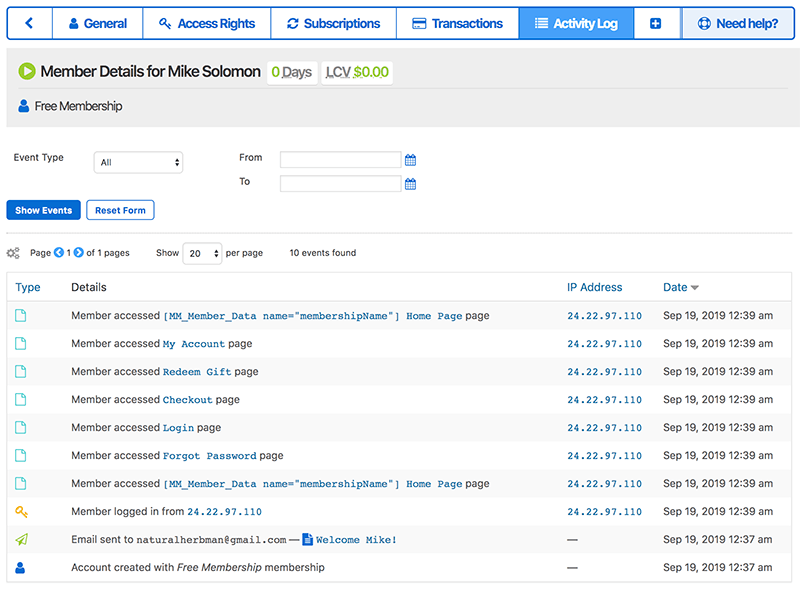
“The Member Activity Log is also very useful for seeing if a user is really engaged. That’s a good opportunity to reach out to them and just say, ‘Hey, thank you so much for using our service. If you have any feedback, please let us know about what you love, what you don’t love, etc.’ There are some talking points there.
Again, with users who may have signed up for your service and aren’t engaged, well that’s also an opportunity. You can reach out to them and just, and not be creepy about it, and say, ‘Hey, is there anything I can help you with?’ That provides some great talking points. And this is information that MemberMouse provides, that you can’t always get from Google Analytics. That’s definitely very valuable.”
Optimización de motores de búsqueda (SEO)
“I feel very strongly about search engine optimization. That’s my background in writing good copy. I want users to land on my site organically. Because that’s a qualified lead. They’re searching for a solution to their problem and if they land on your site, you can provide that solution for them. With SEO, a visitor is already engaged with you as opposed to paid ads.
Content is the biggest thing that Google is looking for when it comes to SEO. You have to have good content. That’s going to allow Google to search your site and pick up what you’re talking about. You’re basically just giving Google hints for what your site is about. Then it can rank you appropriately in the search results.
Obviously, there’s more to it than just writing good content. Having unique images or graphics on your site as well as also important. Google doesn’t want to see the same recycled stock images. I recommend taking a stock image and Photoshop it and add some value to that image. Also, make sure your website loads responsively on all devices. Google is looking at that.
Something else to consider is your page load speed. And yes, Google is looking at whether people are bouncing from your website. So, having some elements on the page as well to get your visitors engaged with your page, whether that’s embedding a YouTube video, or having some call to action buttons, or filling out a form. There are so many different things you can do to enhance the page.
El SEO requiere mucho más tiempo que los anuncios de pago. Pero creo firmemente que el SEO es el camino a seguir. Si tienes un producto sólido y escribes textos convincentes, la gente te encontrará. Y a Google le encantará. A Google le encanta el contenido único. Cree un sitio que Google ame y que sus usuarios amen.
With SEO, if you’re okay with playing the long game, you can write some really compelling content that can work for you for years to come.”
Marketing de afiliación
“Affiliate marketing as well is really valuable. If you have an army of affiliates promoting your product, you’re only paying them if they make a sale. In my opinion, that’s a much better approach than dumping a bunch of money into paid ads. I’ve done both. I’ve worked on projects where we have had a sizable ad budget and it’s just not for me.
When we first started The Ticket Broker Guide, we got involved with ClickBank. We would split the commission with our affiliates 50/50. We did use ClickBank for a long time because they handle all of the payment processing for affiliates. This is very useful. We don’t have to touch the money or anything and split it up manually. ClickBank just does that for us.
Lo único que sugeriría a cualquiera que esté considerando utilizar el marketing de afiliación para hacer crecer su negocio online es mantener cierto control sobre sus afiliados y proporcionarles herramientas y recursos para promocionar sus productos.
Otherwise, you’re going to have a bunch of hooligans putting out a bunch of your regurgitated information that’s not helpful. It ends up looking very cookie cutter. It’s not professional. So, you want to provide your affiliates with some valuable resources like sales copy and graphics or whatever you can, so they can promote your product properly.”
Plugin de afiliación de WordPress
“When picking a membership plugin, you’ve got to have your login page functionality. You also need to have a page where members can go in and edit their own accounts. For example, members need to be able to cancel their accounts on their own if they want to.
Your members also need to be able to update their billing information. All of these things are very important. I found that a lot of the other plugins, with even offering something simple like coupon codes, not every membership plugin offers that. There’s just a lot of things that I find with other plugins that you end up just piecing things together. MemberMouse has those features already in place and they just work.”
Herramientas técnicas adicionales recomendadas
- Alojamiento WordPress – Motor WP
- Creador de formularios – Formularios de gravedad
- Tema para WordPress – Tema Avada o Marco Génesis
- Herramienta SEO – Yoast SEO
- WordPress Dashboard & Management – ManageWP
- Marketing por correo electrónico – MailChimp
- Herramientas de desarrollo de WordPress – Herramientas WP
- Pasarelas de pago – Raya & PayPal
Britt’s Top MemberMouse Tips & Tricks
1. Niveles de afiliación:
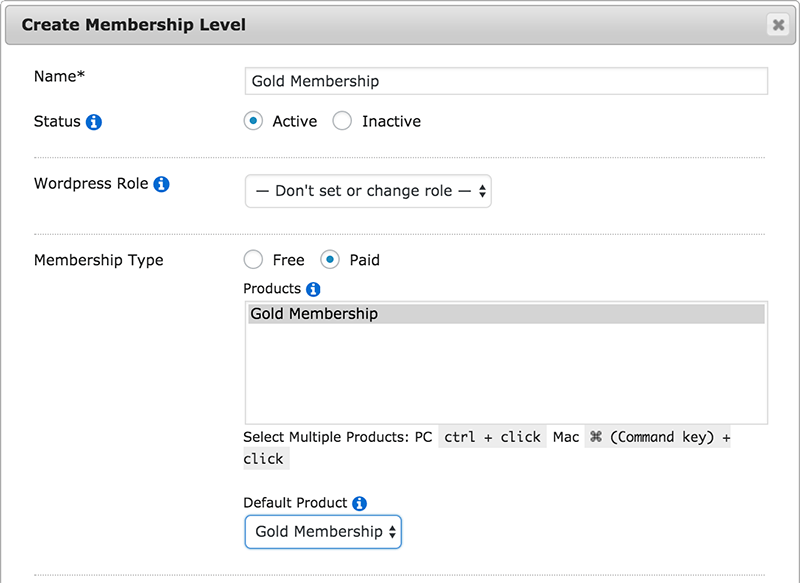
“When you’re building a membership site, I think the first thing to figure out is the membership levels you’re going to have. Each membership level obviously comes with different permissions for that user. So, figuring that out, is the number one step. Then, once you’ve dealt with that, you can really start customizing your users’ experience by using MemberMouse SmartTags.”
2. Etiquetas inteligentes:
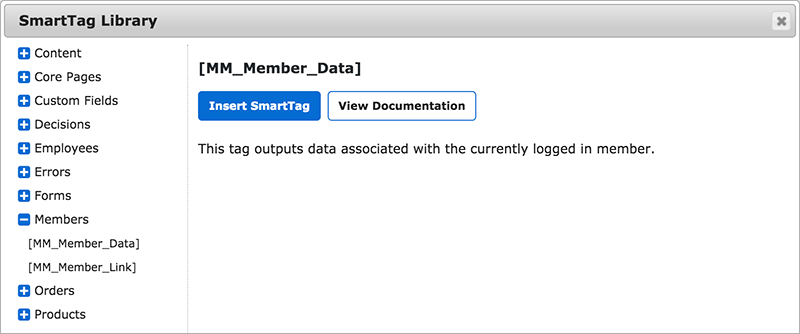
“Whether that be as simple as showing the member’s name on their account page and personalizing it or using some conditional logic and saying, show this content if the user has this membership level. You can really tweak those SmartTags and get them working for you and guide members in a certain direction that you want them to go because you can show them different information based on their membership level.”
3. Prorrateo de suscripciones:

“There are also MemberMouse features that allow you to prorate subscriptions. It’s very powerful stuff and it saves a lot of admin work. You can have all of this stuff already set up in place. You don’t have to have members emailing you and saying, ‘Hey, I’d like to upgrade or downgrade,’ and then you’re having to manually go in and adjust all that stuff.
What’s nice is that you don’t need to do that with MemberMouse. You can have it already all set up. And basically, any use case scenario that you can think of, MemberMouse is capable of handling. MemberMouse is a true all-in-one solution.”
4. Upsells:
“We have one upsell because we have two membership levels. So obviously, if a member signs up for the lower membership level, we use SmartTags to show them information, like snippets of your upgraded membership level, and say, ‘Hey, this is what you’re missing out on.’
For example, we can tell our lower tier members something like, ‘we have a private ticket broker chat going on over here. Come check us out!’ And even when they are on the top membership level, we can engage with them further by using SmartTags to show them different information It’s really powerful. This is a whole rabbit hole of information here.”
5. Gestionar miembros:
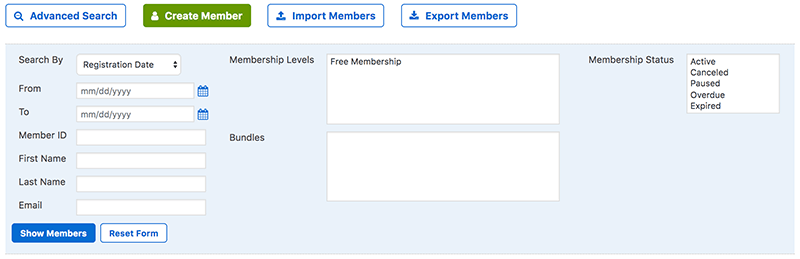
"Sé que he dicho que intentamos automatizar muchas cosas con MemberMouse y dar a los usuarios el control para actualizar sus cuentas o cambiar su nivel de afiliación, información de facturación, todas esas cosas. Pero, obviamente, siempre hay casos en los que tenemos que entrar y cambiar manualmente alguna información de un miembro.
Me encanta el panel de administración porque es muy intuitivo y sencillo. Creo que cualquiera podría aprender a gestionar ese aspecto de MemberMouse. Me gustan mucho las funciones de administración de MemberMouse en comparación con otros plugins".
6. Funcionalidad todo en uno:
“MemberMouse is truly an all-in-one solution. It’s very scalable. It doesn’t matter if you’re just starting out with your membership site or if you’re already up at enterprise level where you’ve got thousands of members. Just like WordPress, it’s very scalable and there’s lots of support for it. You guys have a very comprehensive knowledge base. Basically, anything that you get stuck on or want to customize, the answers are already there in the knowledge base. It’s very well documented. That’s really important.
With other plugins, oh my goodness, you end up having to buy all these different extensions. And it’s just like, okay, so this $29 plugin turned into $300, and I think, ‘well geez, why doesn’t it just come with that in the first place?’ I don’t want to have to guess whether I need this extension or that extension…
Sí, hay un tiempo de configuración inicial para configurar correctamente todas las páginas principales y hacer que funcione bien con tu tema and everything. But at the end of the day, MemberMouse is very enterprise-level software that’s also suitable for someone just starting out. It’s pretty powerful stuff! And I really like the fact that when you go into the member logs you can see how members are interacting with your site. That’s super powerful information. And again, that’s something that a lot of other membership plugins don’t have or don’t do well.”
Conclusión
¡Uf! Hemos cubierto mucho terreno en este post. Gracias por seguir con nosotros.
Esperamos que hayas disfrutado conociendo a Britt y aprendiendo de su perspectiva sobre el diseño y la construcción de un sitio de membresía para el éxito.
¿Qué preguntas tiene para nosotros sobre el diseño de sitios de afiliación?
¿Le gustaría saber más sobre la UX de los sitios de afiliación o los procesos de flujo de ventas?
Let us know in the comments below! We’d love to hear from you.
Hasta la próxima, manténgase al día con la Blog de MemberMouse y sintoniza con nuestro podcast!
Tenemos muchos artículos e invitados fantásticos en camino.


Blair Williams
Cuenta de empleado creada por MemberMouse



 ES
 EN
 DE
 FR
 PT


